Get Healthy!
- Posted March 26, 2026
New WHO Guidance Aims To Speed Tuberculosis Testing
The World Health Organization (WHO) is urging countries to move faster to detect and treat one of the world’s deadliest infectious diseases: Tuberculosis (TB).
On March 24, a day widely recognized as World TB Day 2026, the agency released new guidance supporting simpler tests that can be done near where patients get care, instead of only in certain labs.
WHO said newer tests are portable, run on battery power and can give results in less than an hour. What's more, they cost less than half as much as many current molecular tests, which could make them easier for more countries to use.
"These new tools could be truly transformative for tuberculosis, by bringing fast, accurate diagnosis closer to people, saving lives, curbing transmission and reducing costs," WHO Director-General Dr. Tedros Adhanom Ghebreyesus said.
"WHO calls on all countries to scale up access to these and other tools so every person with TB can be reached and treated promptly," he added.
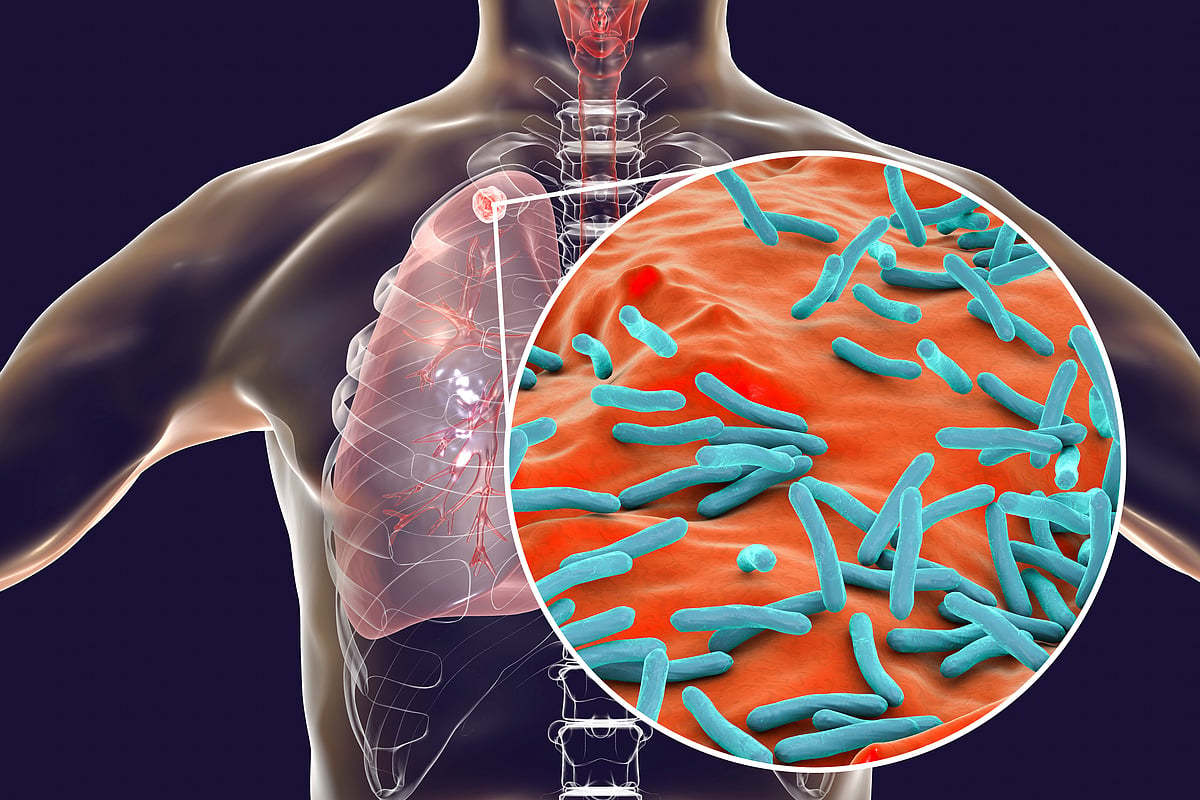
TB is a bacterial infection that usually affects the lungs. It can be prevented and treated, but it still kills more than 3,300 people each day, according to WHO. Every day, more than 29,000 people get sick with the disease.
WHO said global efforts have saved roughly 83 million lives since 2000. But those gains are now at risk as cuts to global health funding threaten TB programs.
Along with the newer tests, WHO is also recommending tongue swabs as another way to collect samples.
This could help adults and teenagers who cannot cough up sputum, the mucus usually used for TB testing. WHO said the change could help reach those at higher risk of dying from the disease.
The agency also backed a sputum pooling strategy for TB and rifampicin-resistant TB. In pooling, samples from several individuals are combined and tested together.
WHO said the newer testing tools could also be used for other diseases, including HIV, mpox and HPV, which may help support more patient-centered, one-stop testing services.
Expanding the use of faster tests, including point-of-care urine tests for people living with HIV and simpler near-point-of-care tests for people with and without HIV, could help close major gaps in diagnosis, the agency said.
That could mean fewer delays in starting treatment and less disease spread.
WHO said many countries have also struggled to adopt rapid TB testing because of high costs and the need to transport samples to more centralized labs.
"Investing in TB is a strategic political and economic choice, generating up to US $43 in health and economic returns for every dollar spent," said Dr. Tereza Kasaeva, director of WHO’s Department for HIV, Tuberculosis, Hepatitis and Sexually Transmitted Infections.
"What is required now is decisive leadership, strategic investment and rapid implementation of WHO recommendations and innovations to save lives and protect communities," Kasaeva added in a news release.
WHO said new testing tools are an important step, but they alone won’t end TB.
The agency said the world still falls far short roughly $5 billion needed each year for TB research. That gap is slowing work on new tests, treatments and vaccines.
More information
Learn all about tuberculosis at World Health Organization.
SOURCE: World Health Organization, news release, March 24, 2026


